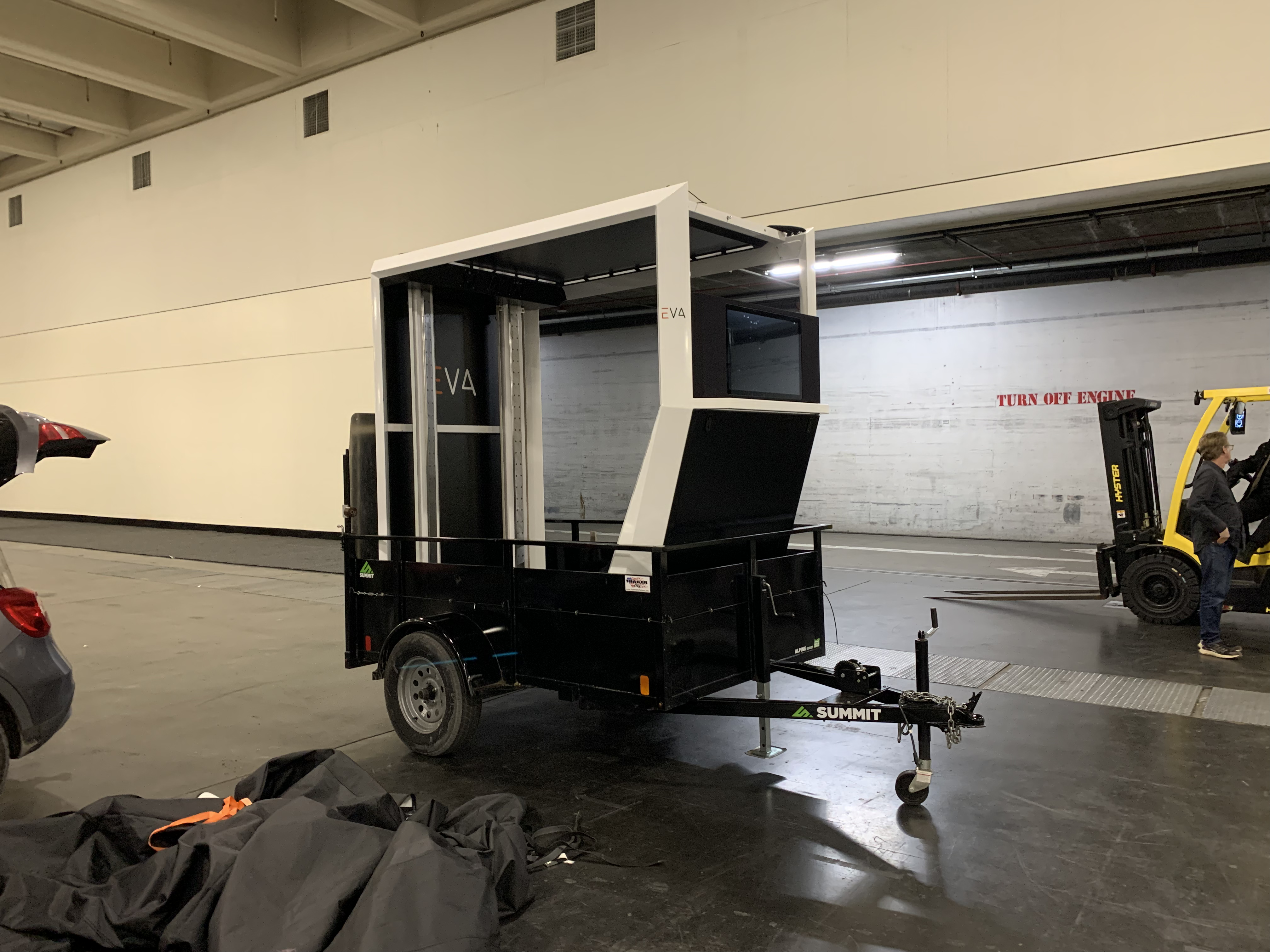
Ethereal Matter MEK · via Studio Alloy
A Full-Body Haptaic Game Controller
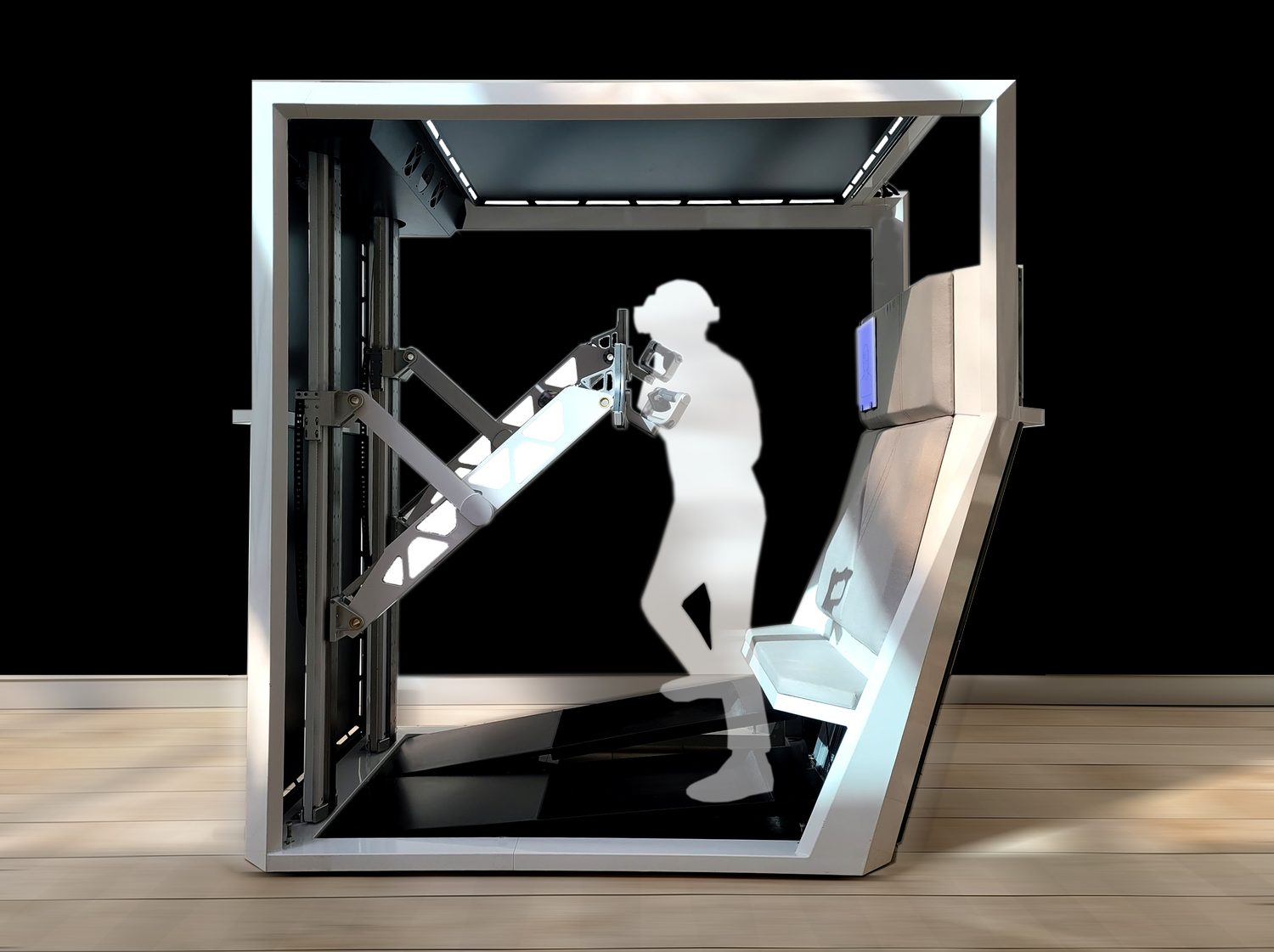
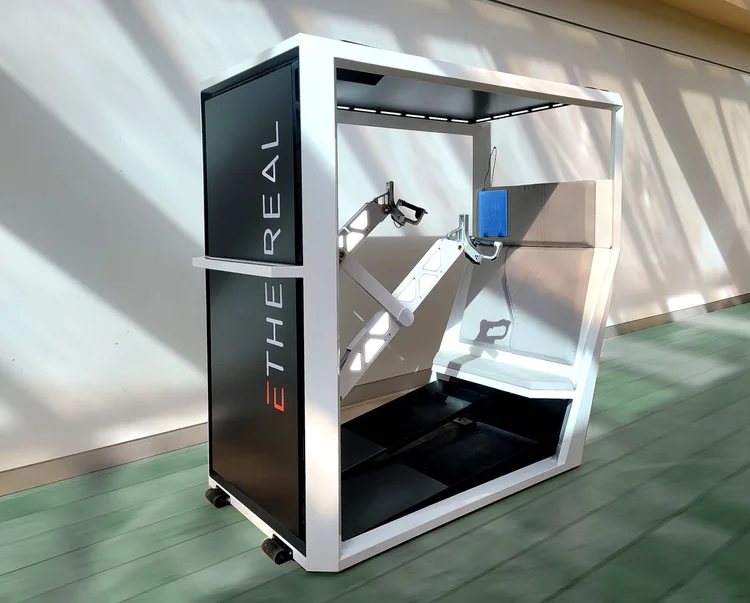
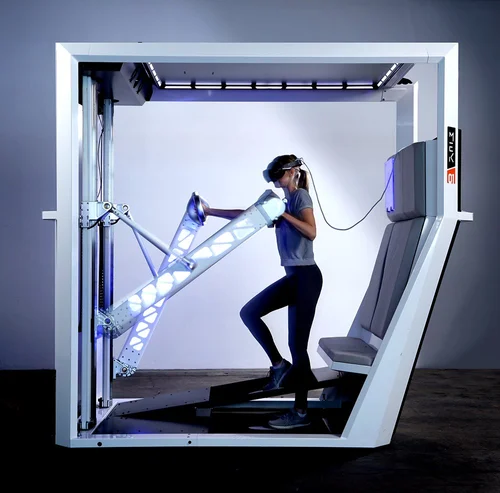
Designed the embedded electrical stack for the MEK - a full-body robotic haptics platform for VR with force-feedback armatures and foot platforms - delivering three custom control boards running bespoke firmware.
Objective
The MEK delivers full-body haptics for VR - force-feedback armatures the user holds and foot platforms they stand on. Making that work means a coordinated set of embedded boards: low power and wireless at the hands, force-aware and lit at the armatures, and motion-controlled at the feet.
My contribution
- Designed the complete embedded electrical stack for integrating motion control and feedback with the game engine.
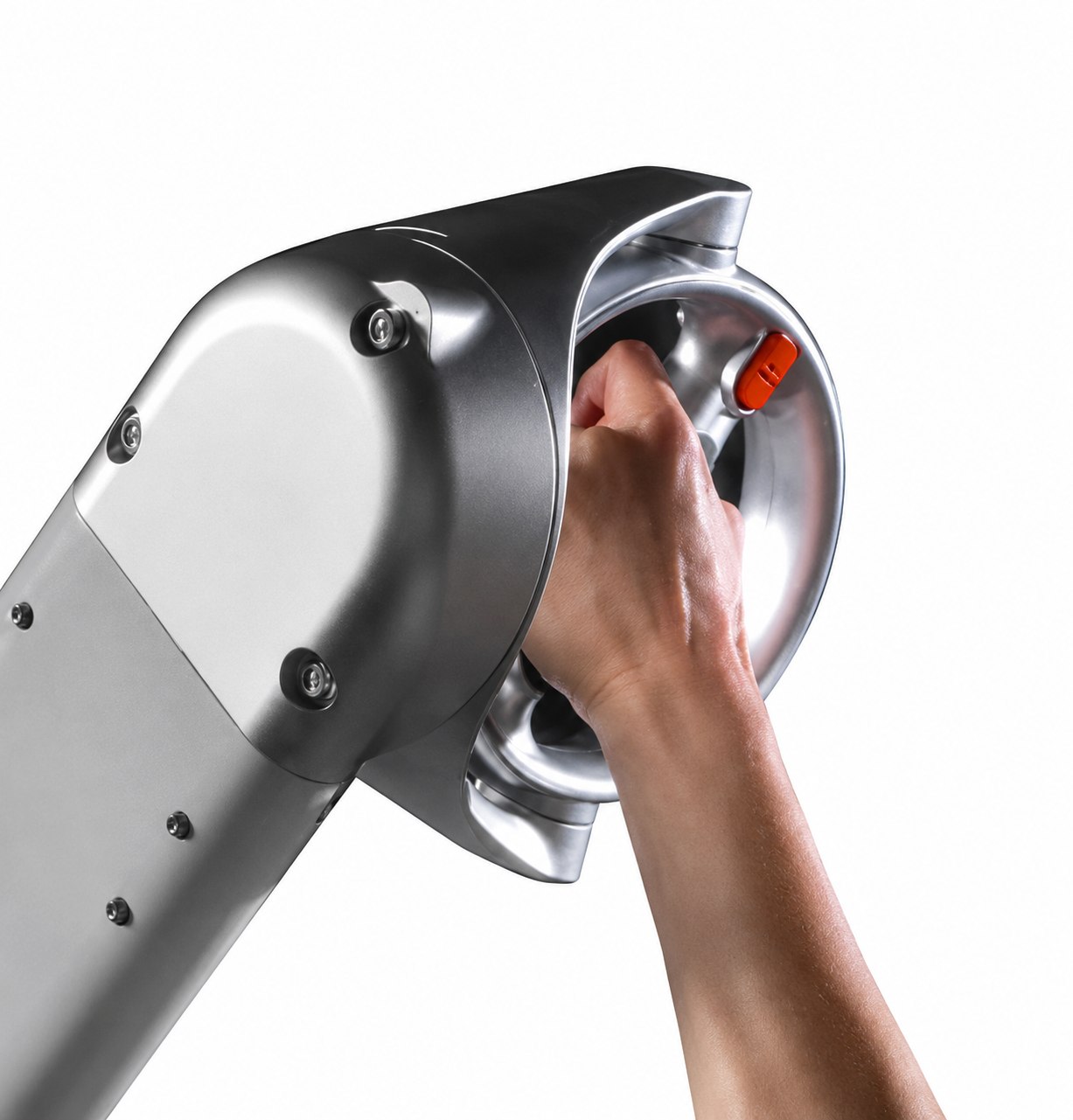
- Delivered three custom PCB families: low-power BLE hand controllers; armature control boards integrating load-cell sensing and lighting control with a BLE receiver; and foot-platform motion control boards.
- Wrote all embedded firmware across all three board families.
Technical Details
Three board families divide the system. The hand controllers are low-power boards with several switches for user interaction within the game engine. Each controller was designed to maximize battery life drawing only a few milliamps when active.
The armature (wrist) boards integrate three triangulated load-cell used to calculate the 3 dimensional force the user applies to the handgrip. They connect wirelessly to the handgrips to read the button inputs and charge level of the controllers and passes that along with the load data to the computer running the game engine. The armatures also have a vibration motor and LED strips that are controlled by the wrist boards. They are triggered by in-game events that the game designer can call.
The foot-platform boards handle motion control underfoot. It controls three states: grounded, stair stepper, and balance mode. These foot-platform states are also callable by ingame events.
Challenges
The most difficult part of this project was managing the communication protocals between all devices. At its most complex, handgrip button signals would be sent over BLE to the wrist boards, the wrist boards would add that data into a data structure to send the computer over serial, and the computer ran a custom script that translated the serial data structure from serial to a package readable by the game engine.
For demonstrations, all of the systems had to be functional independent of the game engine, so I also developed a custom script that would allow the entire device to be controlled through keyboard shortcuts.
Development gallery